The New York Times ran a
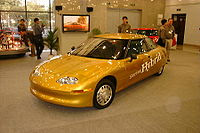
story this morning entitled "At G.M. Innovation Sacrificed to Profit". The story contained a long litany of missed innovation opportunities within GM that were not limited to fuel-efficient cars. GM had started a minivan project a decade ahead of Chrysler but the project was killed by the GM finance people. Same story with Saturn. Same story with the EV1.
Micheline Maynard, the NYT journalist wrote in her article today:
For the last half-century, virtually all of G.M.’s chief executives, including Mr. Wagoner, have come from its financial side, which has judged most initiatives based on whether they will be profitable.
Innovation or profit, which comes first? The answer, obviously, is innovation. But real innovation is by definition something new and different. And innovation comes with a whole variety of unique challenges. The minivan was not a technological innovation but a marketing innovation. The technology to build a minivan was no different than that needed to build the cars and trucks of the day. The bet, and it was a huge bet for Chrysler, was that people would ditch their station wagons for the boxy little utility vehicles. Chrysler won the bet, handsomely. Hybrid technology is a doubly challenging innovation. First, the technology itself needed to be developed. And then there was the ever-present marketing innovation challenge. Toyota made the bet. GM didn't. Now it looks like Toyota is a run by much smarter people than the U.S. automakers.
(Disclosure required here: I own a Prius and I love it. I have also owned a Chrysler minivan for the last 20 years.)
But I don't think it is quite so simple as laying the blame on the current US automaker management as though they couldn't see the value in innovation. This has much more to do with the stages of the corporate life cycle than it does with out-of-touch executives. Little companies want to become big companies. They usually have to invest a fair amount of money in the beginning to get started on the growth curve. All the US automakers did that in the early part of the 20th Century. Their investors sweated bullets wondering if they would ever see a return on their investments. Over time, of course, the investments started paying dividends (literally) and investor pain turned to investor pleasure. When profits go on long enough they start to feel like an entitlement. The company can do no wrong, it is simply a mechanism for printing money. The result is an arrogance in management that now feels like it can dictate to the market. Remember the "What's good for General Motors is good for the country" quote by a former GM CEO? The reason that the company exists at all is lost in the giddiness of profits.
There are always multiple stakeholders that have needs that must be met if a company is to be successful: the customer, the shareholder, and the employees. When the raison d'etre for a company becomes only to "increase shareholder value" (which I have actually heard directly from executives in my own corporate experience), the company is probably going to start ignoring the very customers that keep it in existence. Don't get me wrong, this is not about chasing after every little demand that the marketing department might hear from their customers. Most of these are incremental changes anyway. The real changes and the big bets come from sea changes that look like they are coming but you can't be sure (but if they do, you better have put some big bets down years earlier to be prepared) or they come from needs that customers don't even know they have (who knew that Post-it Notes would become ubiquitous?).
Great long-term executive management at large successful corporations is a rare commodity. The whole system is biased in favor of near-term profits over long term viability. Most of us are notoriously bad at deferring near-term pleasure for being better off later. I would take my hat off to management that can resist the temptation to maximize quarterly profit and instead think on a five-year or longer time scale. Wall Street would want their heads on a platter. The ability to do the right thing for the long term, even if if means a little less today, is the secret of success. That kind of attitude is what supports the investments necessary for innovation to prosper. That is what the U.S. automakers (and most of the rest of U.S. business) have forgotten.
So what comes first, innovation or profit? Maybe what really comes first is a clear, sustainable vision. And just as importantly, it is a vision which has the ability to change as the world itself changes. No wonder it is so hard to find truly great executive management.


